Ending with a WIN!
posted on
April 6, 2026

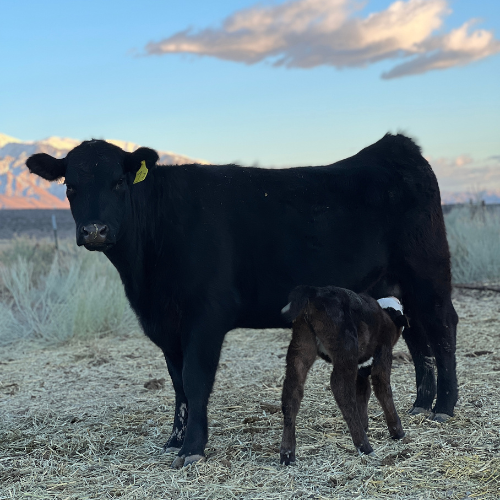
With the sun shining bright on a crisp January morning we were elated to see our first calf on the ground, a healthy heifer! 10 days earlier than the first expected due date but we made sure to prepare our calving boxes in early January so we were ready. Our preparations include ear tags for the calves, towels, and OB equipment for mother cows having a challenging birth. A fun fact - in the 12 seasons that we calved cows prior to 2026, we never pulled one. Positive evidence that our bull selection for low birthweights, high growth, and high Calving Ease Direct (more in this post) is working! Seeing a calf already standing is always the best sight. It typically means it was easy for the mom and the calf is healthy.
That was the case for this little heifer. She was standing to nurse, strong legged and ready to run. Her mother was very protective, keeping her head low and a strong stance to show that our presence was not welcome. We managed to sneakily catch the calf for a quick look over and to put her ear tag identifier in, 1P, so we could begin tracking calves for this year. After a short time with us she zoomed back to her mom and was nick named "Speedy" little baby. Speedy finally got a calf friend 5 days later when our oldest Charolais mother cow had her heifer. After that there were new calves almost everyday.
Calving season is quite intense and can provoke so many emotions. We try to calve on our hay fields where it is very open and easy to see. There is a lot of joy when the days are sunny and calves are born healthy without intervention. That is how most of January was. The warm sunny days made for pleasant cow checks and happy warm calves. We witnessed several births and ended the month with 38 healthy calves, zero intervention. Nature is awesome.
The beginning of February also started very smooth, although the warm weather was coming to an end as there was cold forecasted. Thankfully the cold weather here in the Eastern Sierra is typically mild for cattle. As long as they have feed and fresh water in front of them to keep them warm, they do just fine. And calves born in the cold might not appreciate the initial temperature change but warm up very quickly once dry and have a tummy full of colostrum. We prepare by feeding the cows more so that they both fill their tummies and have a dry warm place to bed down. Similar to the bright days, the snow brings joy for the winter season that we get to appreciate for a short bit. Snuggling up together in the front seats of the pickup to check cows, and braving the bitter cold for a workout feeding large bales off the hay trailer. The snow came in much deeper than expected, so there were times of getting the truck stuck and spending hours trying to dig it our before trudging through the deep snow to get a tractor to pull the truck. Thankfully the kids enjoy making snow angels, sneaking up to pet calves because they can't move quite as quickly, and generally playing in the snow so as long as there's snacks to go around these days can go smoothly. On some of the coldest days, we did have a challenging birth and the start of predation issues. I won't dwell on those statistics much because we still had a very successful calving season, but some cases did help us to brainstorm ways to improve our practices for next year.
We ended February with 62 healthy calves and only a few more cows to calve in the following week. Surprisingly, bull calves took the lead making over 65 percent of the calf crop. Normally it is closer to a 50-50 split between genders. We joke that it was the universe's way of saying it is time for more MCR beef!
The final beef heifer to calve was 28M (a two year old) who had 28P, our final heifer of the year. We have her birth on video and will have to post it some time. It was a very sweet end to calving.
Just when we thought we could put things away for the year, we noticed that our dairy cow Buttercup was starting to produce milk or "bag up" as if she would be having a calf. She was indeed exposed to the bull nine months earlier but appeared "not bred" on the pregnancy test we took in the fall. Not knowing her exact due date and slightly worried about her having a challenging birth because of her small frame, we stayed very close to home and checked her frequently. Okay - I may have even popped our tent outside so that we could be close in case something happened in the middle of the night. Thankfully she finally went into labor one sunny morning. We snuck away to move our beef cattle to a different field at the ranch and planned to pack some beef but I asked to go home and check on Buttercup because I had a suspicion she might be calving. And she was! I noticed her laying down while we were driving up and then hopped out to see a hoof already poking out. She was doing great. I checked to make sure another front hoof and nose were in the front too, the baby literally dives out of the cow. Everything was set right. Not knowing exactly how long she had been working on having the calf we decided to assist a little and the calf came right out. An alert bull calf. Mom got up and did her thing to lick him off - an important part of bonding for them as she learns his smell. The calf tried to stand up but was not successful. We snuggled the sweet fawn colored calf and then left them alone for a bit.
Approaching the two hour mark, I went to see if the calf could nurse and he couldn't stand. Something was not right. At that point he had warmed himself so much in the sun that he was panting. Intervention was needed. The calf got a ride on the kids wagon to the shade and I brought Buttercup up to milk. I was able to milk out some colostrum and put it into a bottle for him. He wasn't strong enough to suckle. Tubing was the next plan. Knowing he was also dehydrated I added some electrolytes to the colostrum and planned to put a tube down his throat to get the milk straight into his stomach. It is essential that calves get this for passive immunity. Jake's dad is a retired veterinarian and suggested that we get him a shot of Selenium and Vitamin E, thankfully we had the supplies to do that. Jake's brother and sister in law are paramedics so I called on their skills to administer IV fluids. With those interventions, the calf was still seeming very tired and somewhat lifeless. We checked on him while finishing other chores for the evening. Then the calf got a ride back into the pen with Buttercup. She immediately went to licking him and moving him. That stimulation seemed like more than what was needed so the kids and I made a warm bed of shavings for the calf in our trailer and set him in there for the evening. We fed him more colostrum and covered him with blankets to stay warm. We left him knowing that his chances of life were slim, but we were hopeful.
I snuck out in the middle of the night to check him and feed him once more and he was still alive! Again, I hoped for the best. The next morning, he had moved! He was not able to stand yet but he certainly shuffled his way around the trailer. He also went pee and poop, other positive signs. We continued our care for him throughout the day and felt that he was getting strong enough by the evening to go back with his mother, Buttercup. The next morning he was standing and trying to nurse! We were hesitant to call this a win just yet, but odds were certainly feeling like they were in our favor. By the fourth morning he was nursing Buttercup on his own. By that point it felt appropriate to give him a name. Star, Sonny, and Blanco were on the list but we settled with Lucky because he is both lucky to be alive and we are lucky to have him. At two weeks old he is getting quite rambunctious playing with the other cattle and us.
Turns out our dairy cow, Buttercup, had a selenium deficiency and this was passed along to her calf. Selenium and copper are micro-nutients that our native soils are very deficient in. We support our beef cows with free choice selenium salt blocks and a vitamin shot two times a year. Our dairy cows also have free choice selenium salt and a grain supplement when lactating. Clearly it isn't enough though. So trying to stay proactive and use this as a learning experience, we plan to take blood samples of our cattle this year to get a better idea of how things are for them and ways that we need to support their nutrition. This was a challenging birth filled with many new learning experiences. The positive outcome feels like the win we needed to end our 2026 calving season.